

How Architecture Workflow Software Helps Civil Architects Manage Projects Better
Civil architects juggle far more than blueprints. Between client approvals, contractor coordination, material specifications, and regulatory compliance, a single project can generate hundreds of moving parts. Consequently, keeping every detail aligned by memory or scattered spreadsheets quickly becomes unsustainable.
This is exactly where architecture workflow software has become indispensable — turning scattered spreadsheets, emails, and site notes into one connected system that keeps every stakeholder aligned from concept to completion
Centralizing the Chaos of Project Management
Traditionally, project management for architects has meant switching between five different tools — one for drafting, another for client communication, a third for budgeting, and, on top of that, a stack of PDFs for approvals. As a result, small details often slip through the cracks simply because no single source of truth exists. Fortunately, modern architecture workflow software eliminates this fragmentation by centralizing drawings, timelines, budgets, and approvals into a single dashboard.
With this centralized approach, civil architects can track a project’s status in real time, flag bottlenecks before they cause delays, and, perhaps most importantly, give clients a transparent view of progress without a single status-update phone call. In other words, the software doesn’t just organize information — it actively prevents the kind of communication gaps that typically cause costly delays.
This centralization is particularly valuable for civil architects managing multiple concurrent projects, since even a small miscommunication about a load-bearing wall specification or a zoning requirement can otherwise cascade into costly rework. Therefore, a unified workflow reduces this risk considerably by ensuring that every team member — from architects to interior designers — works off the same live version of a plan. Ultimately, this shared visibility becomes the foundation on which the rest of the project’s efficiency is built.
Real-Time Collaboration
One of the most practical benefits of workflow software is drawing acceptance or rejection. Architectural revisions happen constantly, and without a system that tracks changes, teams risk building from outdated drawings.
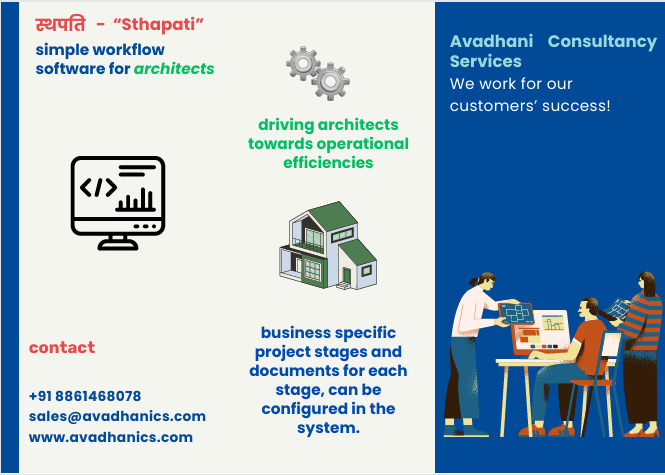
Sthapati timestamps instantly, and notifies all stakeholders of a project— a feature that’s become essential as remote and hybrid design teams become the norm in the Architecture, Engineering and construction industry.
The Bottom Line
For civil architects, workflow software isn’t just about drawing tools — it’s about operational discipline. Centralized project tracking reduces miscommunication.
As project complexity grows and client expectations rise, firms that adopt these connected systems are better positioned to deliver on time, on budget, and with a stronger digital presence than those still relying on fragmented, manual processes.